What do we really have to show for all the knowledge we’ve gained?
How to Build a Second Brain by Tiago Forte
In 2009, we were consuming 34 GB of data every day and in 2014, that became 174 newspapers of daily information intake. What do we do with all that information? Where does it go?
We need to manage all that information we receive and want to keep. That’s where we come across terms like commonplace books, Second Brain, Zettelkasten and Linking Your Thinking (there are more out there). All of them are systems created to help us go from information overload to effective knowledge workers.
What is a Second Brain?
A Second Brain is a system that should allow you to keep all that knowledge you find and like and be able to send it to your future self, so they can put it to good use.

What are the benefits of having a Second Brain?
Some benefits you will experience from having a Second Brain are:
- Find anything you’ve learned, touched or thought about in the past within seconds.
- Organize your knowledge and using it to move your projects and achieve your goals.
- Save your best ideas and conclusions to find them easy and skipping all the way to the finish line.
- Relax, knowing your knowledge is safe and not even a detail will be lost.
All those benefits give the most important one: having more time to be creative.
Your mind is for having ideas, not holding them.
Getting Things Done by David Allen
Of course, you will get all those benefits only if you commit yourself to the system.
Okay, I like what I’m reading, but,
How does a Second Brain work?
In this post, I will use the system Second Brain created by Tiago Forte
First, it depends on the person who uses it. The system should adapt to your needs, goals and way of thinking; that means you should copy another person’s system. Don’t misunderstand, you will need to change the way you think for it to be effective.
Tiago’s Second Brain works with two systems, CODE and PARA. With CODE, we organize how each note is treated and with PARA we decide where it goes, and we manage our projects.

CODE stands for:
- Capture: Save information that resonates from the world around you using your own words.
- Organize: We have to put each note into its most useful place for our future selves.
- Distill: Get the juice out of that info!! Attention, when you get the info is not the best one to distill it. If we wait a couple of hours working on a completely different task or complete day, we will be more objective. Two important things here: – Always leave a note better than when you opened it.
– Use your own words - Express: Now get all that info and do something with it, because if we do nothing, then what was everything for?
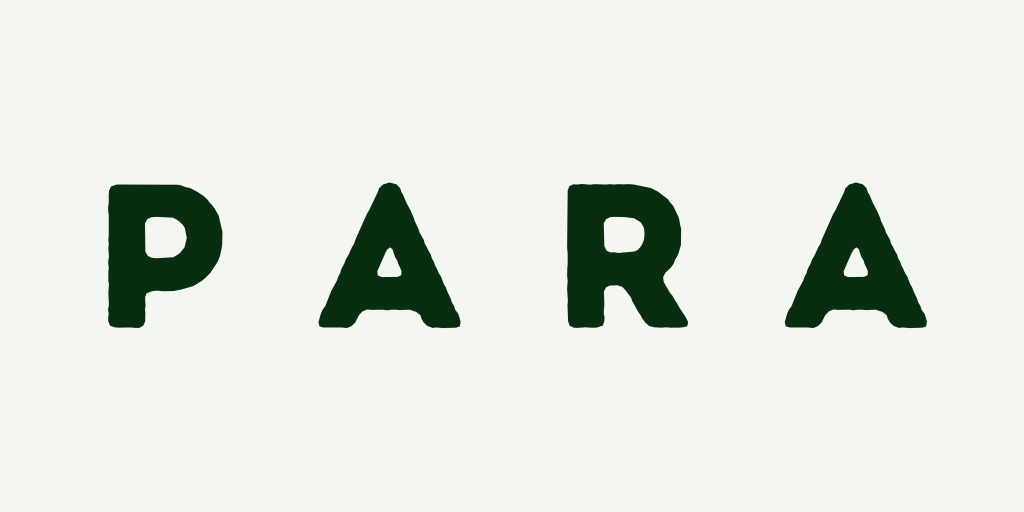
While PARA stands for:
- Projects: Short-term projects you are working on now. Example: a blog post.
- Areas: Things you want to work in the longer term. Example: a series of blog post or the blog,
- Resources: whatever interests you or may end up being useful. Example: that article you found on note-taking.
- Archives: A box where you can put all finished or on hold things (it can be whatever)
More on PARA here:
Now you know a little about what is a Second Brain, there is more info to come in my blog. Of course, you can also check out Tiago’s website: https://fortelabs.com/start-here/
And his book: https://www.amazon.es/gp/product/B09MDNDYYF/ref=dbs_a_def_rwt_bibl_vppi_i0
Resources:
- Building a Second Brain by Tiago Forte
- How to take Smart Notes by Sönke Ahrens
- Getting Things Done by David Allen
- My Second Brain
 HEART, MIND & GUT
Leave a comment