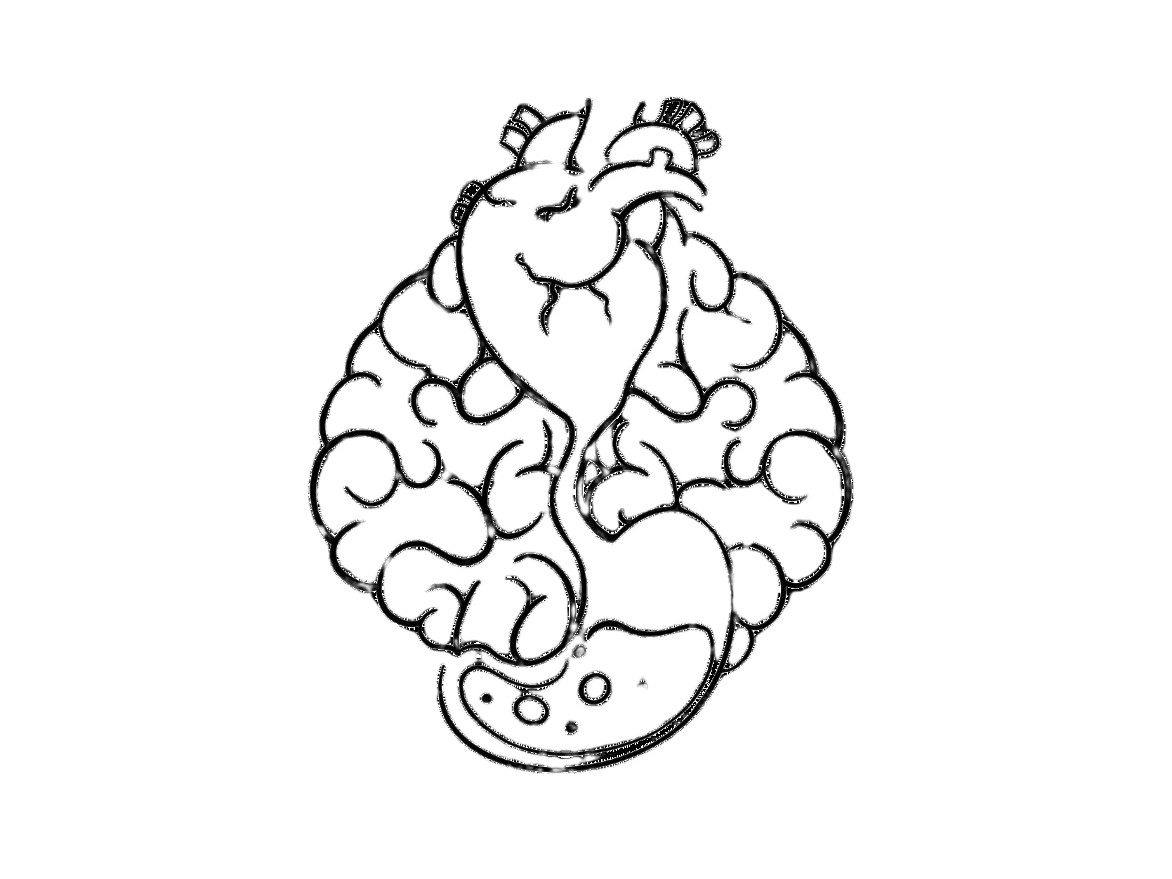

I love that thrill multitasking gives me; I feel alive. I have always identified as a multitasker but, lately it has been dragging me down and I know I’m not the only one.
Nowadays, our screen time has increased significantly, if not in front of more than one at once. We can work and have the TV or a streaming platform on or even tackling multiple tasks at once. We often believe that multitasking in this way makes us incredibly productive. Let’s see what happens in us while multitasking.
Attention Residue
First of all, multitasking doesn’t exist, even if I will keep using the word. What we call multitasking it’s actually switching between all the tasks really quickly. It feels as we are doing everything at the same time because of attention residue.
What is attention residue?
When you switch tasks, some of your attention remains on the first one(s), meaning you can’t give the latest task your total attention. Imagine leaving tons of apps open on your phone or laptop. It gets slower and slower because the RAM is working on the background on the previous apps. We are no computer, but the shoe fits.

When we are “multitasking” we need a lot of brain resources such as working memory, long-term memory and different impulsivity and inhibitory controls to actually make the switches.
Release of Cortisol
You are being followed on the street or hunted by a lion. Your heart is beating out of control. It’s all you can hear. That’s called adrenaline. Adrenaline prepares us for fight-or-flight situations, activating our little lizard brain for short periods of time.

Cortisol is the same, but in the long run. You are completely stressed in your personal and work life. Both adrenaline and cortisol are awesome when they are needed, out of time, they are terrible for us. Multitasking releases cortisol so we can achieve that “higher” productivity. (1)
High levels of cortisol in our bloodstream have side effects such as
- Inflammation and weakened immune system
- High Blood Pressure
- High Blood Sugar (can develop diabetes)
- Modifying fats and proteins metabolism.
- Altering your circadian rhythm (sleep-wake)
- Osteoporosis
- Hirsutism (excessive hair growth in women)
Possibly reduces gray matter
This surprised me. Turns out that those who media multitask (or screen multitasking) have smaller gray matter. I say possibly because we don’t know if it’s the media multitasking that reduces gray matter or having less gray matter makes us more prone to media multitask.
What we know is that those that engage in media multitasking have poorer cognitive control performance (we can’t control our brain) and, interestingly, worse socio-emotional abilities (less empathy and emotional control). (2)
Increases overwhelm and burnout
Multitasking is really hard for the brain, all the switching between tasks spends a lot of energy. It becomes an “energy vampire”. It can make you feel always tired and more prone to burnout.
On top of that, because your brain is tired. After you have been making all tons of decisions with all the switches (importance of the task, priority, rewards, etc.) you can’t expect the brain to make wonderful decisions. (3)

If it’s so bad, why do we keep doing it?
Release of Dopamine
We continue to do it because it feels amazing. We feel so powerful and accomplished.
When we are “multitasking”, we feel like we are achieving a lot of things, small things here and there. Everything is under control. We are getting a dopamine boost. Dopamine, being the feel-good hormone, makes us feel amazing.
Then, because we want that boost, we switch tasks even more, making it worse. We become addicted to “multitasking”.
Are we more productive while multitasking?
Nope. Even though we feel super productive and accomplished because of the dopamine rush, we are less productive. Those of us that are multitasking addicts feel we are superb at multitasking and that we are very productive. This is just an illusion as we are actually way less productive when compared to “single-tasking” control group. (4, 5)
Not only are we less productive quantity wise, we also lose quality. As our brain is tired, we start to make mistakes here and there. We probably don’t even see them while checking for said errors. Don’t worry though, you will see that typo after sending the mail.
“Multitasking may seem like an efficient way to get more done in less time, but in reality, it can be counterproductive, as it takes more time to switch between tasks and can lead to errors and decreased quality of work.”
Ophir, Nass, and Wagner (2009)
On multitasking women
If I had a euro for every time I’ve heard a reference to “women being able to do more than one thing at once,” I would have achieved financial independence by now.
It may seem that way, but women also lose some IQ points by multitasking. Men, probably as the sample for the study was small, lose up to 15 IQ points by multitasking while women only 5-10 points. Why?
I have a theory. As women, we have multitasked so much to cope with all the chores and jobs that we believe we are good at multitasking. We fall into the illusion of control.

For some time in history, women have been the ones to take care of the home, be a “house maker“. Cooking, cleaning while taking care of the kids while possibly pregnant is not a job for the weak and it requires multitasking. You can’t leave the children alone to attend the food on the stove or vice versa, plus you have to clean. Thus, the multitasking mom appeared.
Later on, around the First World War, women took up their husband’s jobs to keep their countries running. The multitasking mom became the multitasking working mom. Women began working outside their homes, but their home chores didn’t decrease. This is a problem today around the world, women having two jobs, the paid job and the unpaid house job. You can read more about feminism history here.
Please, educate your children, boys and girls, from a young age to do house chores, not “helping”.
And stop using any reference that women can multitask better than men. Maybe we actually can do it better than men, but it doesn’t negate all the negative effects multitasking has. Continue reading to know some tips to fight against multitasking.
Multitasking in children and teens
What’s media multitasking?
Media multitasking is simultaneously engaging in two or more types of media or using media while engaging in non-media activities. (6) You can say it’s attending a lecture while texting or online shopping, watching TV while on TikTok or Instagram, pretty sure you understand it.

USA youth spend 7,5 hours per day looking at some kind of screen and 29% of the time media multitasking. That’s a lot of time. (7)
You can imagine that with those screen times, children and teens are just affected, if not more, than adults.
You can check the post here.

If you don’t want to end like SpongeBob multitasking, keep reading for 10 tips.
How to fight multitasking and be productive for real
1. Set realistic goals
Set realistic goals for each task and project. Consider that we always underestimate the time we need to accomplish something. If it’s a recurrent task, you can learn how much time you need for it and plan accordingly.
2. Break down those goals into small tasks
When we break down our big tasks into smaller one we make it easier to achieve something. That way, we get a healthy and productive dopamine boost. That success in a small task makes us eager to tackle the next one, and so on.
3. Turn off your notifications
You are in a lecture, and you get an email or text. You will not check it because you are listening but, who can it be?
“I will just check who it is. Oh, it’s Marlene. What can she need?”
“I will just check what she needs. Oh, nothing important but,
I will just answer her.”
“Nick also messaged me. I will just check it.”
“That’s all for today” and the lecture is finished and you didn’t catch a single thing.
I know, I know I should write novels, just kidding.
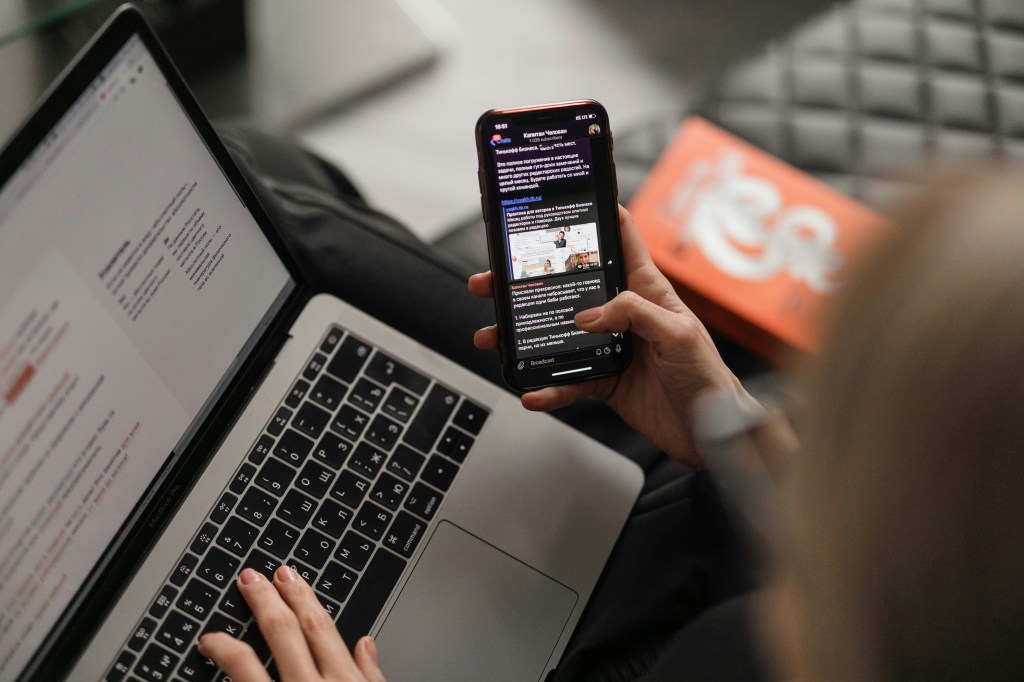
Then when will I check my notifications?
In The 12 Week Year by Brian P. Moran and Michael Lennington, they divide the time into 3 types of blocks, one of them buffer blocks. Buffer Blocks are 30 minutes to deal with unplanned and low-value tasks like deleting email or paying bills. These are tasks that have to be done but don’t produce money nor enjoinment. It’s better to get them done as quick as possible and forget about them.
Plus, this way, we save all the time and attention residue we would have spent switching lots of time between our mail (example) and the important tasks we have to achieve.
If you have a task that doesn’t require checking your notifications, turn them off even if you think you can control checking them.
4. Brain dump
While you are working on an important project, you remember you didn’t do the laundry or didn’t correct that other archive. “I will do it later.” But it keeps nagging you to where you aren’t able to focus on your current task.
Write it down. Just write whatever tasks are nagging you in that “don’t forget to …” Promise yourself that after you are done with the task at hand, you follow that list. I promise that most times, your brain stops worrying about forgetting the task and focus.

Let this be your rememberall!
5. Set a time for social media, texting and other distractions
Just as it’s good for us to set a time for doing low-value tasks, we should set a time apart for media consumption. It’s okay to consume some TV or some similar activity.
It’s important to avoid doing it first thing in the morning or before bed. If you can’t resist checking social media after your alarm, get a clock.
6. Practice meditation or mindfulness
Meditation is king for relaxing the brain. Mindfulness is living in the present without judgement, forgetting about the past or worrying about the future.
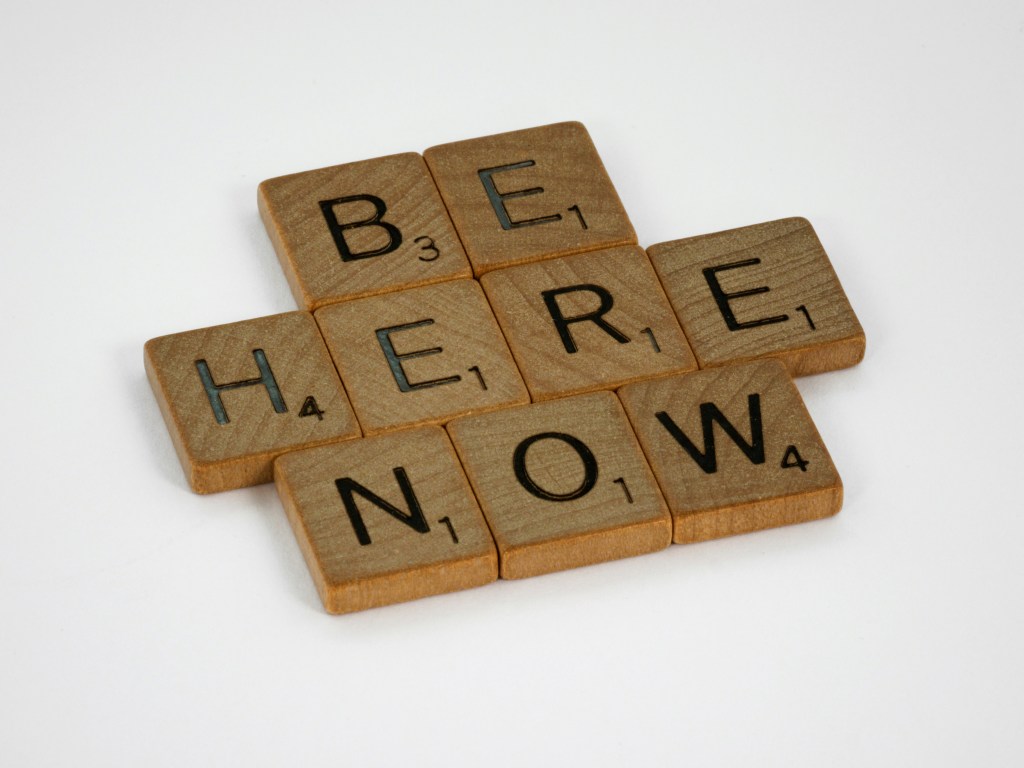
Just as mindfulness helps children, it can also help us. Some benefits of practicing mindfulness in our daily life are:
- Reduced rumination. Rumination comprises repetitive thoughts on negative feelings and distress and their causes and consequences. (8)
- Stress reduction: Mindfulness reduces stress and anxiety.
- Better working memory.
- Focus
- Less emotional reactivity
- More cognitive flexibility
- Relationship satisfaction
- Better self-insight, morality and intuition
- More empathy and compassion
- Better quality of life
We can see that mindfulness brings not only benefits to single-tasking. (9)
7. Schedule energy, not time
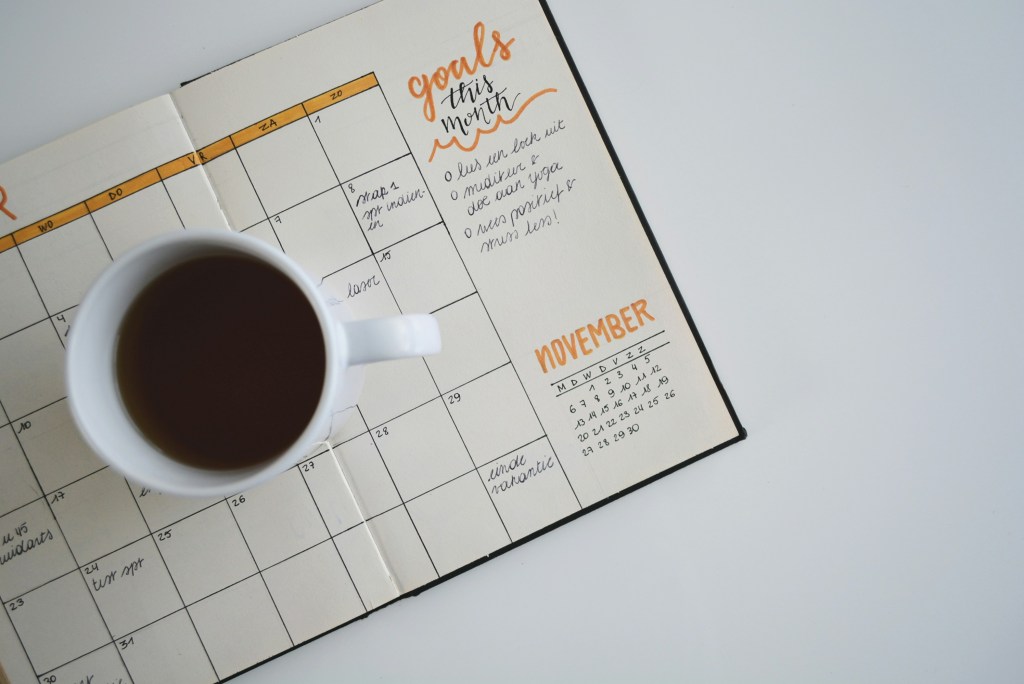
When do you have more energy? Are you a “morning person”? Or are you a “night owl”?
You should schedule your tasks around your energy levels and not your time.
I’m more inspired to write first thing in the morning. Knowing that, I leave my house prepared for the night. That way I wake up, dress up and eat breakfast and write. The days I have to clean or something in the morning when I get to the desk to write, I’m already tired.
If I don’t feel like writing because I’m beat, I will probably do another task that doesn’t require as much brain power, like creating pins for Pinterest.
I understand that sometimes it’s difficult to do this because we work for other people or our environment doesn’t allow it. However, in such situations, there are always alternative options available to make suitable arrangements.
8. Take rests during the workday
Taking rests it’s necessary to keep being productive. Some people like to use the Pomodoro technique, other prefer longer periods of time. I personally like to work on something for 90 to 120 minutes. It allows me time to focus and then work without distractions. Then I will walk around, go to the kitchen and make some tea. I usually take 10 minute breaks.

If you work in an office, it’s very crucial that you move from your desk for your breaks. If you can go outside and breathe clean air to clean your mind even better. Sometimes our headaches come from working in stale and hot air.
9. Keep your work area clean and organized
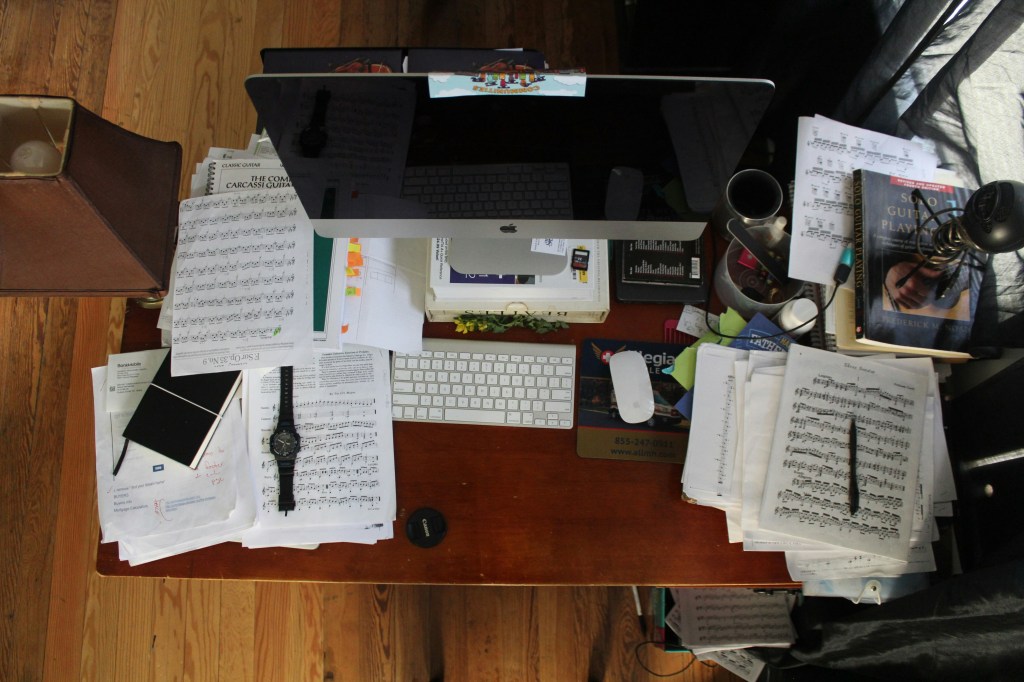
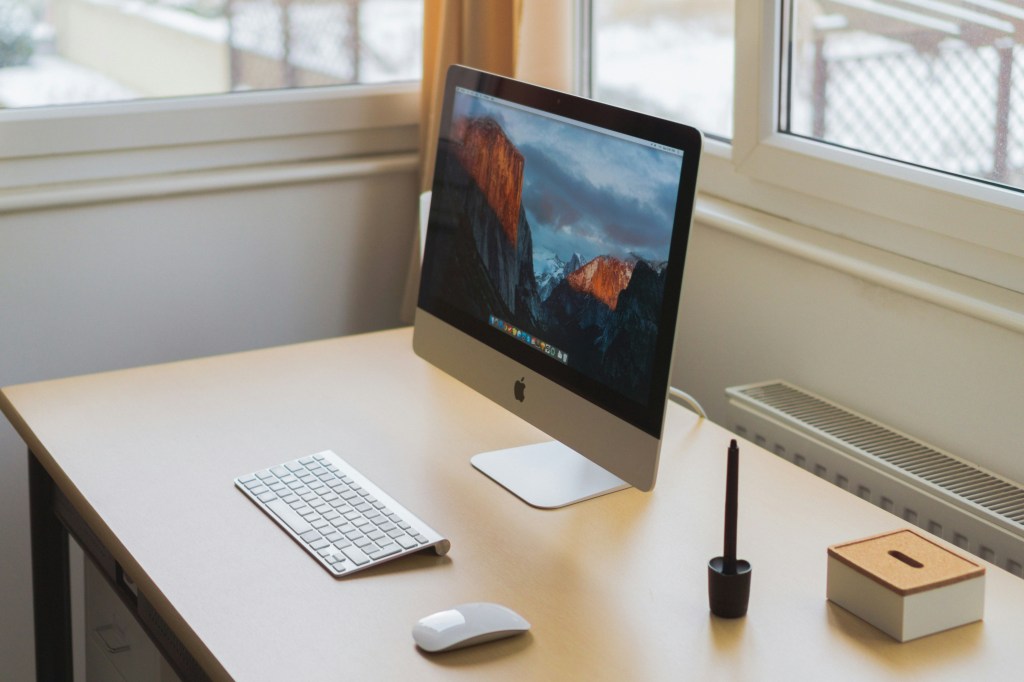
Only keep in your table what you need for the task at hand. For things you use daily but not for every task, you can keep them in the top drawer. This way, you will avoid distractions.
Having clutter on your desk leads to stress, anxiety, lower self-confidence, lower judgement and make you less productive. Meanwhile, a clean desk gives peaceful and focused vibes.
10. Learn to say no
Sometimes we multitasking because we feel it’s the only way we can get everything done. What if we are taking on more tasks than we have to?
Learning to say no is an art. And it’s not easy at all but it’s essential to live a life we actually love.
Now that you know the consequences of multitasking like the release of cortisol (and its consequences), the possibility that it reduces gray matter, the way it overwhelms us, our addiction to it because of dopamine; you are more than ready to stop multitasking. Because, on top of all the dire consequences, we are not as productive while multitasking as we feel.
So please join me as a multitasker in rehabilitation. I’m thinking of creating some kind of “multitaskers anonymous”, let me know if you would be interested.
Sources
- Engelke, Tim. “Why Multitasking Is Far Worse than You Might Think.” Medium, Medium, 9 Sept. 2020, www.timengelke.medium.com/why-multitasking-is-far-worse-than-you-might-think-6148f145a194.
- Loh, Kep Kee, and Ryota Kanai. “Higher media multi-tasking activity is associated with smaller gray-matter density in the anterior cingulate cortex.” PLoS ONE, vol. 9, no. 9, 24 Sept. 2014, https://doi.org/10.1371/journal.pone.0106698.
- “9 Ways Multitasking Is Killing Your Brain and Productivity, According to Neuroscientists.” Mayo Oshin, 1 Sept. 2018, www.mayooshin.com/multitasking-killing-your-brain-and-productivity.
- Wang, Zheng, and John M. Tchernev. “The ‘myth’ of media multitasking: Reciprocal Dynamics of media multitasking, personal needs, and gratifications.” Journal of Communication, vol. 62, no. 3, 25 Apr. 2012, pp. 493–513, https://doi.org/10.1111/j.1460-2466.2012.01641.x.
- Ahrens, Sönke. How to Take Smart Notes: One Simple Technique to Boost Writing, Learning and Thinking.
- Matthews, Natasha, et al. “Media-multitasking and cognitive control across the lifespan.” Scientific Reports, vol. 12, no. 1, 14 Mar. 2022, https://doi.org/10.1038/s41598-022-07777-1.
- Madore, Kevin O., and Anthony D. Wagner. “Multicosts of Multitasking.” Cerebrum, 1 Apr. 2019.
- “Rumination: A Cycle of Negative Thinking.” Psychiatry.Org – Rumination: A Cycle of Negative Thinking, 5 Mar. 2020, www.psychiatry.org/news-room/apa-blogs/rumination-a-cycle-of-negativethinking#:~:text=Rumination%20involves%20repetitive%20thinking%20or,and%20can%20worsen%20existing%20conditions.
- Davis, Daphne M. “What Are the Benefits of Mindfulness?” Monitor on Psychology, American Psychological Association, www.apa.org/monitor/2012/07-08/ce-corner. Accessed 18 Mar. 2024.

 HEART, MIND & GUT
Leave a comment