Gut-wrenching feminist dystopian fiction novel that will suck you in into a world that would eat you and spit your bones.
Impressions
Loved it, I can’t wait to continue reading the series with the second book The Testaments. Amazing world building inside Gilead. Margaret Atwood brings the issues to light in a world full of darkness in a way that turns both the stomach and brain.
Who should read it?
Everyone should read The Handmaid’s Tale, but let me give you some pointers.
This is a hard book to read, both style and plot-wise. Margaret Atwood’s style is beautiful, but it took me around 50 pages to get into her rhythm. After that, it flows like water.
Now, The Handmaid’s Tale is not an easy to read, it’s not a happy fairytale. It’s 100% worth it though. Everyone should read The Handmaid’s Tale, man or woman, doesn’t matter.
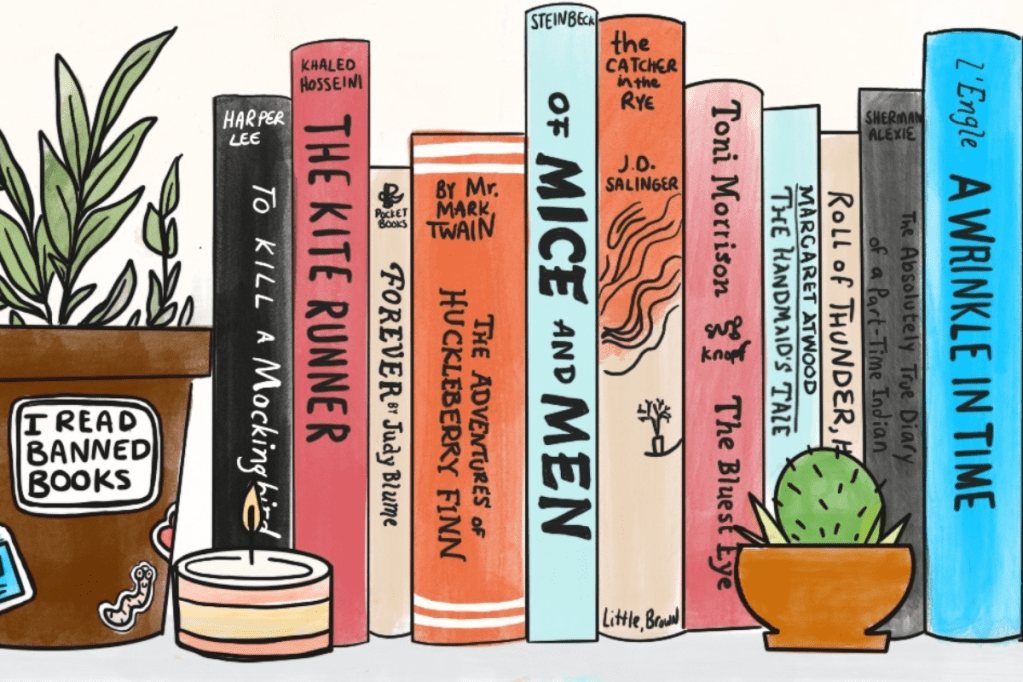
The only question is when should we read The Handmaid’s Tale? The Handmaid’s Tale is one of the Banned Books that include books like The Bluest Eye by Toni Morrison, Looking for Alaska by John Green, To Kill a Mockingbird by Harper Lee, The Catcher in the Rye by JD Salinger, etc.
It has been banned in some places in some moments because it has sexual and violent content. The Handmaid’s Tale is not spicy even if it has sexual scenes. The included sexual scenes aren’t there for the enjoyment of the reader, they are there to make the reader think, and think hard.
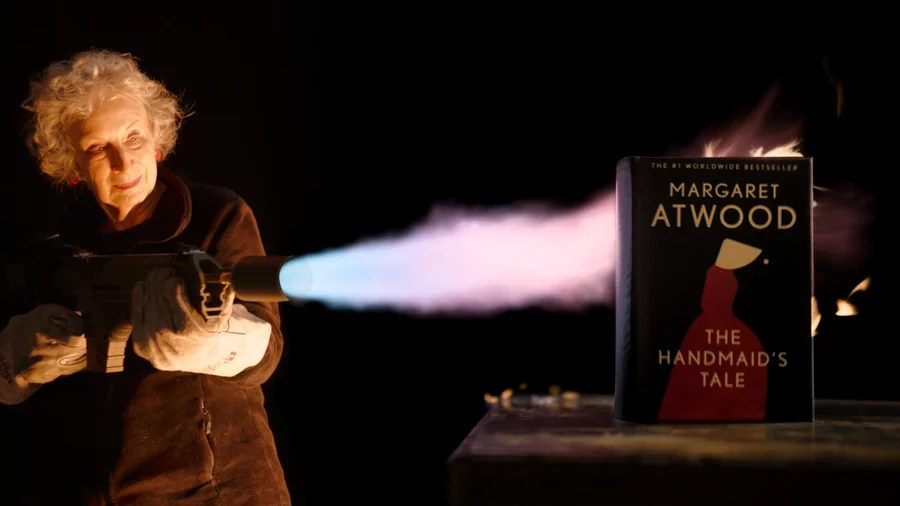
Margaret Atwood, the author of The Handmaid’s Tale, commissioned a fireproof copy of the title to later torch it herself, unsuccessfully. My thought was “I need one in my life“. I discovered the one-copy edition bid for 130,000 dollars. All profits went to PEN’s America’s work to fight against book banning.
Young adults are reading far worse things nowadays without the educational benefit. It’s important for young readers to have someone guide them through reading The Handmaid’s Tale. It would help them make sense of the book and apply it to their reality instead of just being a fiction novel.
My top 4 quotes
But a chair, sunlight, flowers: these are not to be dismissed. I am alive, I live, I breathe, I put my hand out, unfolded, into the sunlight. Where I am is not a prison but a privilege, as Aunt Lydia said, who was in love with either/or. (page 8)
Photo by Melissa Askew on Unsplash
A rat in a maze is free to go anywhere, as long as it stays inside the maze. (page 165)
Photo by Maksym Kaharlytskyi on Unsplash
My nakedness is strange to me already. My body seems outdated. Did I really wear bathing suits, at the beach? I did, without thought, among men, without caring that my legs, my arms, my thighs and back were on display, could be seen. Shameful, immodest. I avoid looking down at my body, not so much because it’s shameful or immodest but because I don’t want to see it. I don’t want to look at something that determines me so completely. (page 63)
Imagine being brainwashed to the point you find your own body shameful and it reminds you of your hell.
You are a transitional generation, said Aunt Lydia. It is the hardest for you. We know the sacrifices you are being expected to make. It is hard when men revile you. For the ones who come after you, it will be easier. They will accept their duties with willing hearts. She did not say: Because they will have no memories, of any other way. (page 117)
Photo by Tim Mossholder on Unsplash
Summary and my thoughts
Welcome to the Republic of Gilead, a totalitarian, warped theonomic and neo-Puritanical regime that has taken over most of the continental United States of America after killing the President and the Congress.
Roles in The Handmaid’s Tale
Here you have a small schema about the roles inside Gilead in The Handmaid’s Tale. The implications and reflection are down below.
Female Roles
1. unwomen
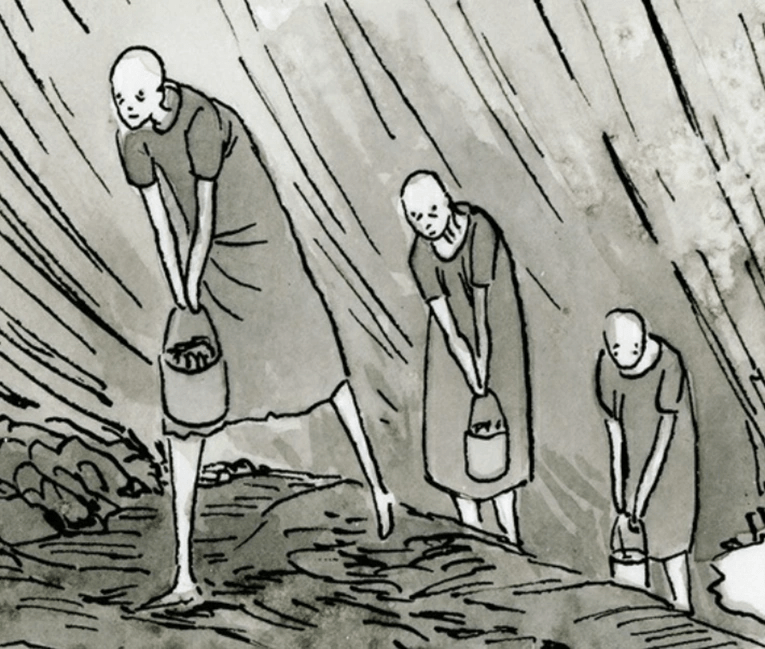
Unwomen are usually infertile women that are stripped of their human rights and sent to the Colonies. In the Colonies they clean toxic waste, including radioactive elements. Most die from long-term irradiation. Some lucky ones end up as farmers.
Example: Offred’s mom
4. handmaids
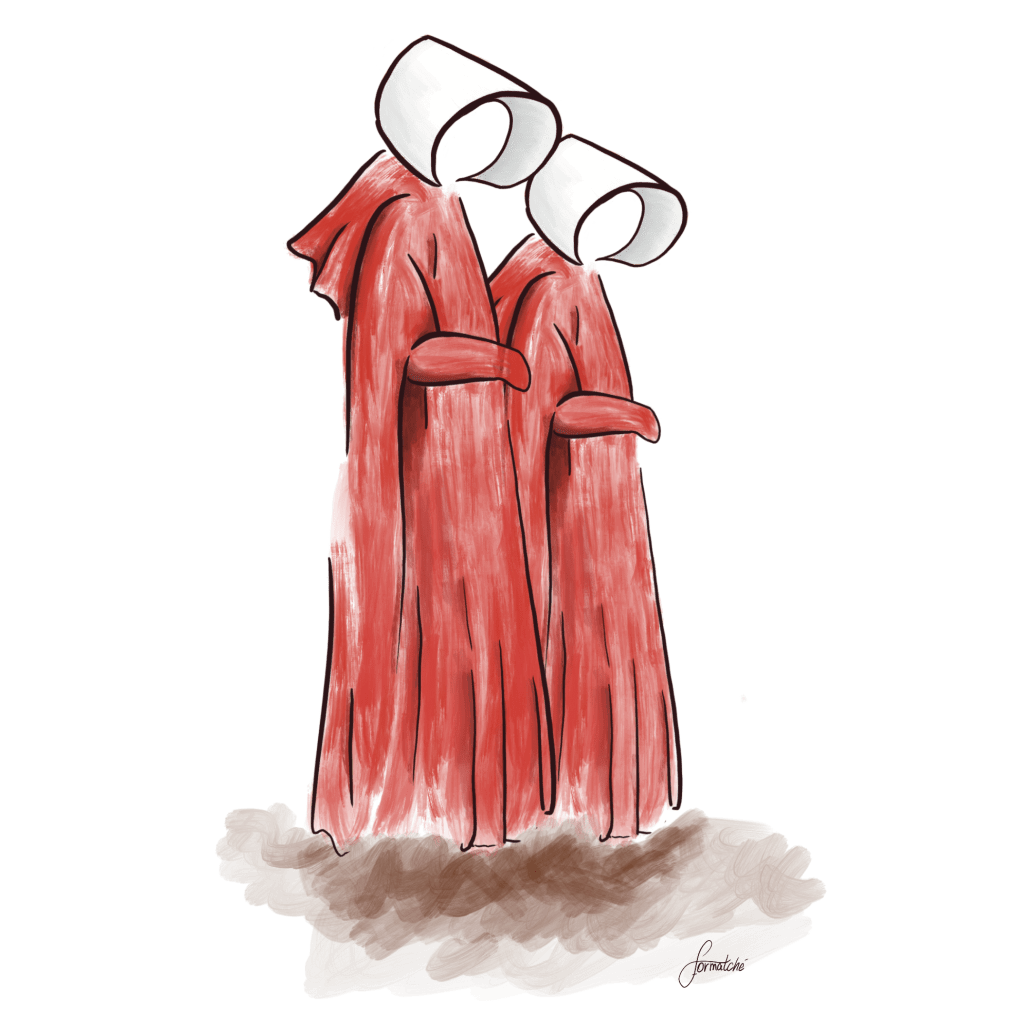
Fertile women ruled as sinful according to Gilead’s laws. If they don’t give birth to a healthy baby within 3 tries (3 households) they become Unwomen. Pregnant Handmaids enjoy a higher status, and if they successfully give birth to a healthy baby, they are safeguarded from being classified as Unwomen.
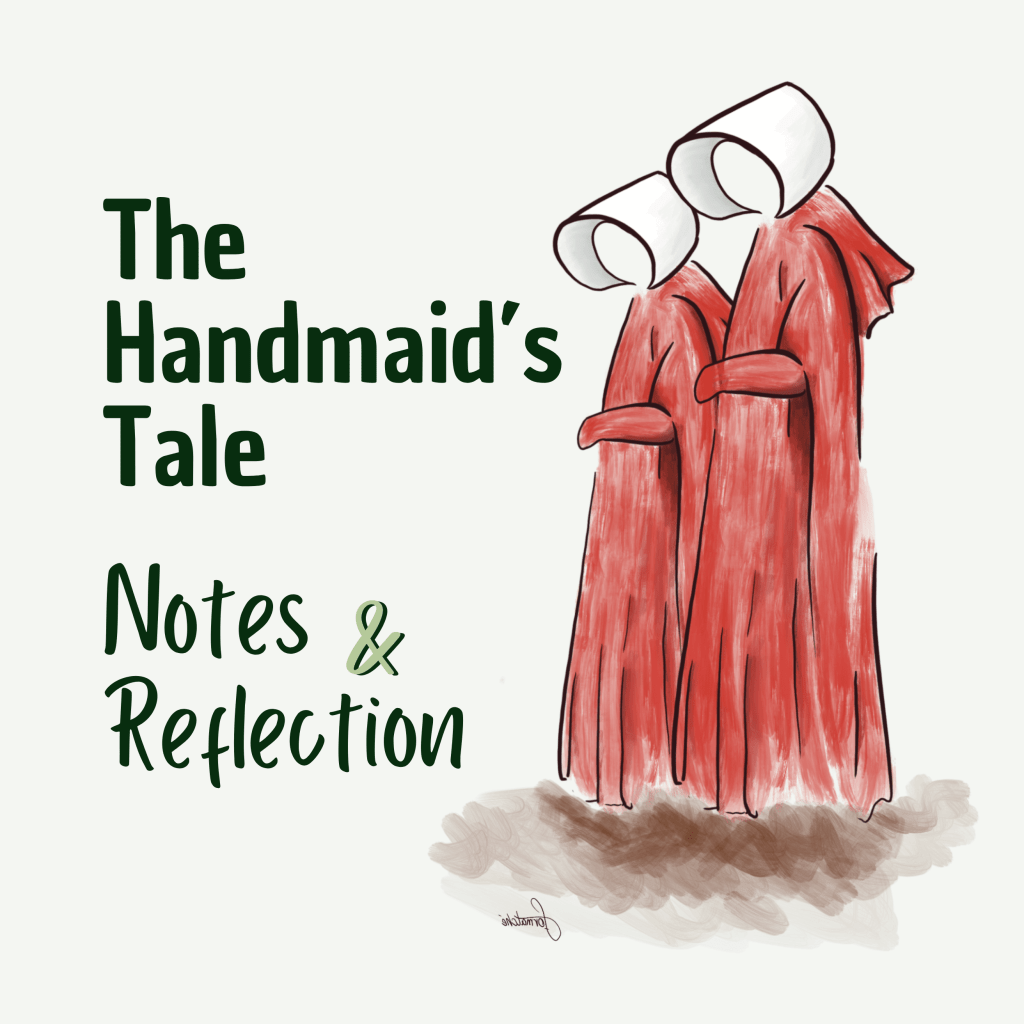
They wear red to represent fertility and to make them easier to stand out.
Example: Offred (lead character)
2. Wives
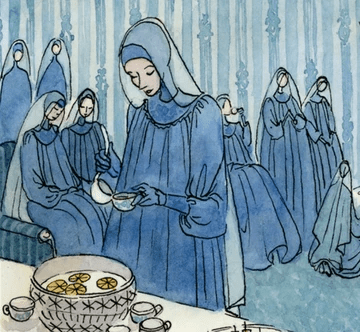
Wives are the highest ranking women inside Gilead. Their power depends on their husband’s position. They can order house-staff around as well as Aunts and Guardians.
They aren’t allowed to read and write.
They wear different shades of blue. If they become widows, they wear black to represent their (supposed) mourning.
Example: Serena
5. Marthas
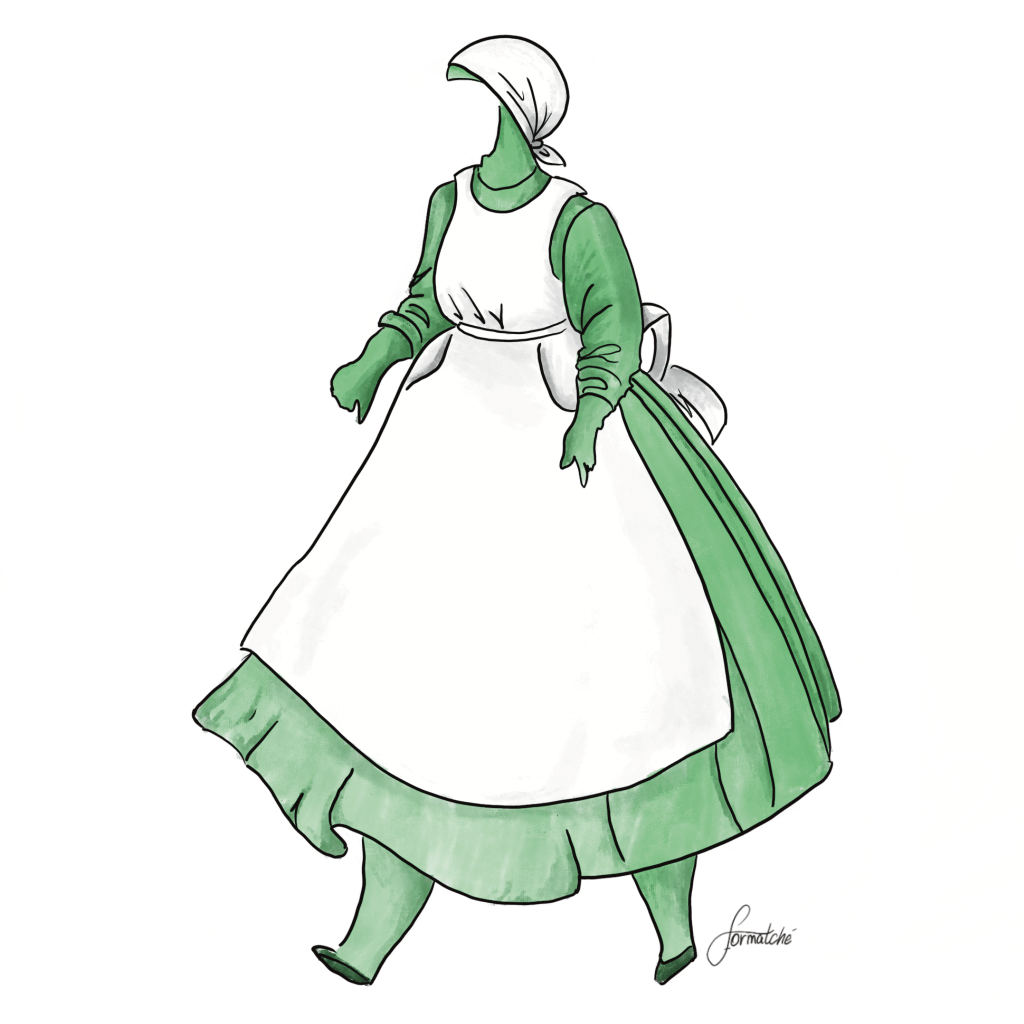
Marthas are servants of households. Pre-Gilead they were unmarried infertile women that lived according to Gilead’s laws before they even existed.
They wear green.
Example: Cora
8. Aunts
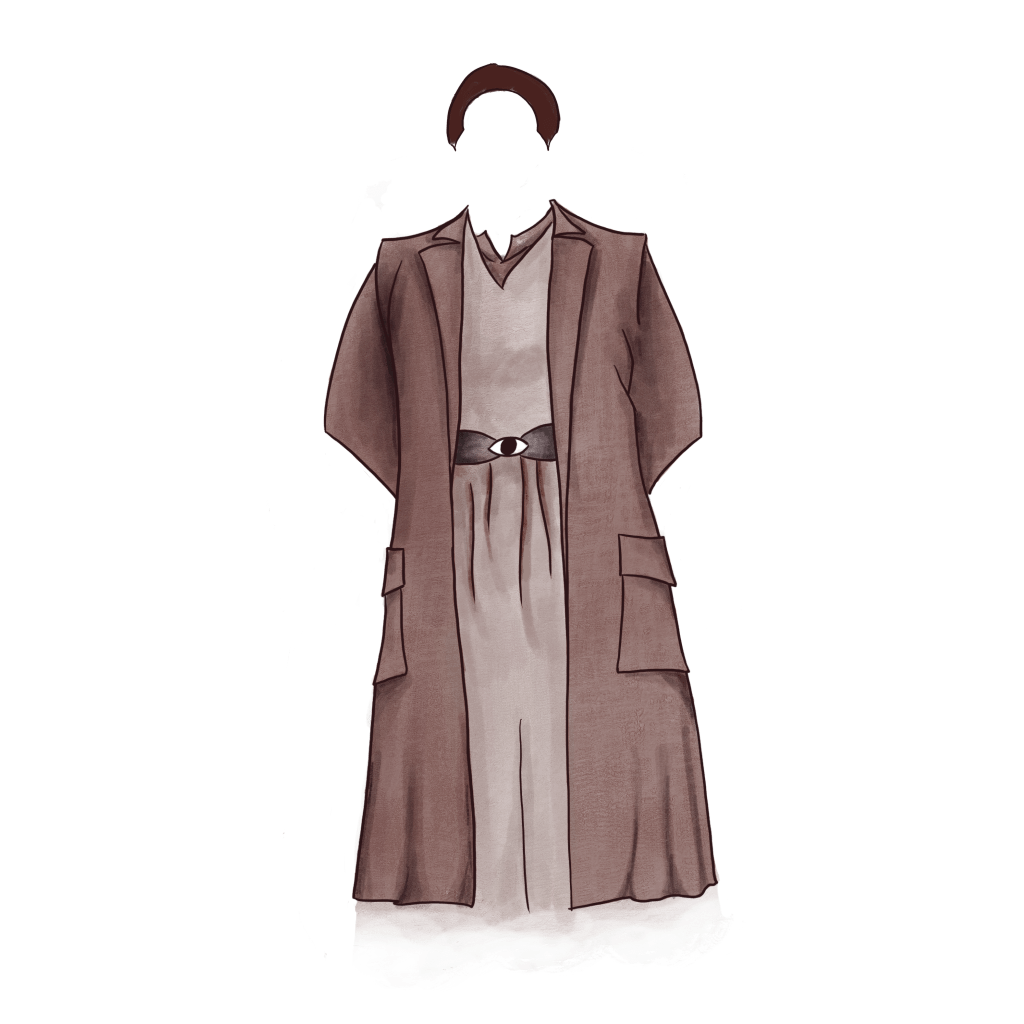
Aunts are the women in charge of Handmaids, Marthas and Unwomen. They are the only women allowed to read and write.
They wear brown.
Example: Lydia
3. Daughters
Adopted or abducted female children raised by Commanders and their Wives. They go to school to learn how to become “good wives,” not to read and write.
They wear pink.
6. Econowives
Econowives play all the women’s role of a Gilead household alone for low-ranking men. They are the Wive, Handmaid and Marthas. If they are fertile they can rise their own children.
If they become a widow, they become Marthas or Handmaids depending on their fertility. They wear grey garments with different colored stripes to represent all the roles they play.
7. Jezebels
Sinful women according to Gilead’s laws that can’t fit into society. They become prostitutes in a club for higher-ups.
They wear whatever “sexy” outfit they can find or make.
Example: Moira
Men’s roles in The Handmaid’s Tale
1. Male Unpeople
Male equivalent of Unwomen.
4. Guardians of the faith
The Guardians of the Faith or Guardians for short are soldiers and the uniformed police. They also serve as bodyguards and drivers to Commanders.
2. Commanders of the Faithful
The Commander of the Faithful or Commanders for short are the top tier of men’s hierarchy in Gilead. Examples : Warren, Fred
5. eyes of god
The Eye’s of God also called Eyes, are the secret police of Gilead. They can be anywhere and report those that go against Gilead’s laws and system.
3. Sons
Adopted or abducted male children raised by Commanders and Wives. They go to school, and will probably become the next generation of Commanders.
They wear light blue clothing.
6. Professionals and Angels
Both Angels and Professionals are the civil and military mid-class.
7. Economan
The standard class for male adults. They can get married to econowives.
PROCEED WITH CAUTION. SPOLIERS AHEAD.
Photo by Muhammad Daudy on Unsplash
Insights and thoughts on The Handmaid’s Tale
“There wasn’t anything for the men to do”
In one of the secret meeting with Offred, the Commander explains one reason for the Gilead coup was because “there was nothing for the men to do”. Pre-Gilead men had nothing to do with women. They could buy easy sex, they could make money, but these things left them incomplete. The men were unable of feelings, they were turning off sex and marriage.
We have pre-Gilead men that instead of seeking mental health help, they overthrown the government and put themselves in charge. Seems to me like a little child throwing a tantrum and then playing dictator.
He justifies it as trying to do something for the greater good, even if it hurts some people. Remind you of some other regimes, right?
“Better never means better for everyone, he says. It always means worse, for some.”
the Commander (p. 211)
We can see the reactions Luke, a normal man, has with each change during the raise of Gilead. When they force Offred to leave her job behind and freeze her bank account, she has nothing to her name, and Luke seems supportive. He doesn’t sound like he understands the magnitude of not owning anything.
When he says he will support her, she thinks he’s patronizing her and then feels paranoid because of that.
But I still felt numbed. I could hardly even feel his hands on me. What’s the matter? he said. I don’t know, I said. We still have . . . he said. But he didn’t go on to say what we still had. It occurred to me that he shouldn’t be saying we, since nothing that I knew of had been taken away from him.
p. 182
We can see here, he’s not really putting himself in her shoes.
He doesn’t see any point in her going to the marches, even if brief. Would he go to the marches if he had been the one robbed of the right of ownership?
I’m not criticizing or saying what this means. These are just my thoughts.
She never voices her perceived paranoia, and when she could have, she’s afraid of losing him. Not only because of love, but because he had become her only way to live. If she lost Luke, she would be completely lost in this regime.
According to the Commander, this way, the men won something, all lost the numbness. They won ownership of everything, including women.
Handmaid’s role in Gilead
Everyone sees Handmaids as lepers and sluts, Marthas, Wives, Commanders, Aunts, the whole Gilead. Seen as lepers even if they are forced into the role of breeders.
We always have a choice, in everything. That’s true, within reason, sometimes our survival instincts override our decision making by not allowing us to throw our lives.
In the example of Offred, she wants to see her little daughter, Hannah, who was taken away from her, because handmaids aren’t allowed to raise children, only make them. She also remembers her happy days with Luke even the fights. The not knowing, being kept in isolation is one of the keys from the system.
After the coup, women that are forced to become handmaids because of their past sins are taken to The Academy, where they have their spirits broken by the Aunts. The best example is Janine, who was gang-raped pre-Gilead and then made believe she was the culprit. She’s stoned by words.
But whose fault was it? Aunt Helena says, holding up one plump finger.
Her fault, her fault, her fault, we chant in unison. Who led them on? Aunt Helena beams, pleased with us. She did. She did. She did. Why did God allow such a terrible thing to happen? Teach her a lesson. Teach her a lesson. Teach her a lesson.
[…]
For a moment, even though we knew what was being done to her, we despised her. Crybaby. Crybaby. Crybaby. We meant it, which is the bad part. I used to think well of myself. I didn’t then.
The Handmaid’s Tale (p. 72)
Both parts are being “taught” to blame rape victims.
Photo by Camila Quintero Franco on Unsplash
From then on, Janine becomes a puppet for the Aunts, completely broken in, catatonic or dissociative fugues sometimes (more on that later). She would do anything for some little meaningless praise.
Handmaids and Jezebels, two sides of the same coin
Then we have the Handmaid-in-training that rebels against the system, only to end up on the other side of the coin of sexuality. While Handmaids have sexual intercourse, as a forced duty, to breed as if they are livestock; Jezebels like Moira as seen as objects of only pleasure for higher ups.
Jezebels live like the pre-Gilead prostitutes the system supposedly banned. They have certain freedoms, such as smoking, while handmaids aren’t allowed to. But in the end, both handmaids and jezebels end up dead or declared Unwomen (slower death) once they are “spent”.
Inside that club we see a clear double standard both gender and ranking-wise.
Wives also have social clubs
Okay, just as their husbands, Wives have found a way to meet up and spend time together. The take turns feigning different illnesses. The sick one stays at home and all the others go “visit” her. You know, a tea party.
Why do Handmaids go everywhere in pairs?
Control, that’s it. Starting a rebellion is way harder when you have no idea who to trust. There are eyes and Eyes everywhere, nobody knows who they are.
Why aren’t Handmaids allowed to read?
Handmaids are not the only ones that aren’t allowed to read. Wives, daughters, Marthas aren’t allowed to read either. Aunts are the only women who may read because they write reports and they have a “teacher” role. Handmaids and other women aren’t allowed to read in Gilead because to read is to think and they don’t want them thinking.
Offred develops sensory deprivation and synaesthesia.
I can spend minutes, tens of minutes, running my eyes over the print: FAITH. It’s the only thing they’ve given me to read. If I were caught doing it, would it count? I didn’t put the cushion here myself.
When she’s with the Commander in their secret meetings and is allowed a book, she devours it because she knows it could be the very last thing she reads.
Synaesthesia is when one sense stimulates another, like tasting or seeing sound, per example. In those same secret meetings, she tastes the letters of Scrabble.
Photo by Surendran MP on Unsplash
Psychology in The Handmaid’s Tale
Offred and everyone develops a system for mental protection. Some of them need it more than others, and it develops differently.
Offred often dreams and has flashbacks with no kind of warning. Janine has nervous breakdowns with dissociative fugue. Both of them are just trying to replace the scary present with a happier past. In the case of Janine, it goes accompanied by amnesia after the episodes.
We have already talked about how Offred develops sensory deprivation. Well, that goes together with emotional deprivation. She often seeks refuge in the past in happy times in Luke, Hannah or Moira. While having emotional deprivation, she sees the Commander secretly, which doesn’t help and develops Stockholm Syndrome.
Photo by engin akyurt on Unsplash
She sees the Commander as more than just her jailer. She feels affection toward him and his “boyish” expressions. It pushes her to be more reckless in their meetings. He plays literal and figuratively and at the end he does nothing for her. (1)
What happens to Handmaids if they don’t birth a healthy baby?
Handmaid’s role in Gilead is to produce healthy babies. If they don’t give birth to a healthy baby in three placements, different households, they are sent to the Colonies to die as Unwomen. The baby has to be healthy. If the baby is deformed or has some problem, it doesn’t “count”.
When Offred doesn’t become pregnant after a couple of Ceremonies, Serena, the Wive of her household offers her “alternative” ways to get pregnant. Like using the household’s chauffeur as “stud”, risking the death sentence just because “You might as well” die trying or die because my husband can’t produce. Here we see two issues inside Gilead’s society, they don’t care for male fertility and Wives wash their hands if discovered.
Maybe, that’s because, Fred (the Commander) can’t have children. But inside Gilead, men are perfect, of course, a man can’t be sterile (the forbidden word). While it takes both parts to produce a baby, they only test and rank one, the female.
What happens if they find a Handmaid has been using “other” ways to get pregnant? She’s dead, but if the Wive was involved? All the Wives know they do this to have children. But if discovered, they will wash their hands and slut-shame the handmaid. “Can you believe it? What a disgrace.”
Shamed or dead if you do, shamed or dead if you don’t.
Religion in Gilead
The Laws and belief of Gilead are, in theory, from the Bible. In reality, it couldn’t be farther away from it. They based it in Genesis 16: 1 to 4 and Genesis 30: 1 to 13.
Let’s read Genesis 16: 1-4:
1Now Sarai, Abram’s wife, had borne him no children. But she had an Egyptian slave named Hagar; 2so she said to Abram, “The Lord has kept me from having children. Go, sleep with my slave; perhaps I can build a family through her.”
Abram agreed to what Sarai said. 3So after Abram had been living in Canaan ten years, Sarai his wife took her Egyptian slave Hagar and gave her to her husband to be his wife. 4He slept with Hagar, and she conceived.
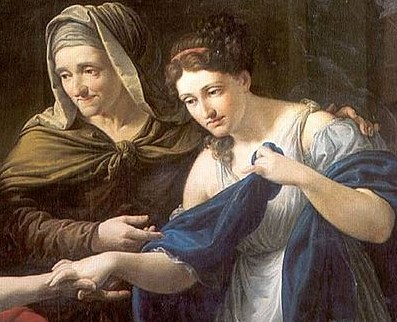
Sarah presenting Hagar to Abram.
But what happens before and after this short fragment?
A while back, God promised Abram that he would have so many descendants that they would be as easy to count as the dust. (Genesis 13:16) And later on, God promises him that his descendants will be like the stars. (Genesis 15:5)
Photo by Klemen Vrankar on Unsplash
Problem? Abram and Sarai were old but hadn’t had the promised child, so they took matters into their own hands. When Abram and Hagar’s son was born, Abram was 86 years old. Imagine that.
Then it becomes Telenovela-level trouble between Hagar and Sarai. We can see the reference for the relationship between Handmaid and Wive.
When Abram is 99 years old, God again reiterates the promise of a child (Genesis 17) and changes their names to Abraham and Sara. Sara gives birth to Isaac in Chapter 21, and the Telenovela continues.
Let’s go read the other text Gilead is based on:
1 When Rachel saw that she was not bearing Jacob any children, she became jealous of her sister. So she said to Jacob, “Give me children, or I’ll die!”
2Jacob became angry with her and said, “Am I in the place of God, who has kept you from having children?” 3 Then she said, “Here is Bilhah, my servant. Sleep with her so that she can bear children for me and I too can build a family through her.” 4 So she gave him her servant Bilhah as a wife. Jacob slept with her, 5 and she became pregnant and bore him a son. 6 Then Rachel said, “God has vindicated me; he has listened to my plea and given me a son.” Because of this she named him Dan. 7 Rachel’s servant Bilhah conceived again and bore Jacob a second son. 8 Then Rachel said, “I have had a great struggle with my sister, and I have won.” So she named him Naphtali. 9 When Leah saw that she had stopped having children, she took her servant Zilpah and gave her to Jacob as a wife. 10 Leah’s servant Zilpah bore Jacob a son. 11 Then Leah said, “What good fortune!” So she named him Gad. Leah’s servant Zilpah bore Jacob a second son. 13 Then Leah said, “How happy I am! The women will call me happy.” So she named him Asher.
Genesis 30:1-13
If you read it, it feels like a rented-womb battle. Where two Wives battle to see who has more children, using their servants or Handmaids.
Neither of these episodes should have happened like this if everyone had followed God’s will. Why does a regime that, in theory, follows God, anchors itself into two moments where people went against His will? This is a fiction novel, right?
Well, I remember visiting an aunt that’s a nun and seeing these pamphlets they would read every single day. One text for every weekday. Not from the Bible, but written by somebody. They didn’t read from the Bible, just those pamphlets.
In Gilead, they hang pastors even though they actually believe in God? Probably because they believe in God and not in Gilead’s made-up religion, plus they have the knowledge to start something.
Just remember that a text outside its context it’s a pretext.
The Handmaid’s Tale Relevance in Today’s World
While on my way to my digital bookstore, Amazon, because I’m a Kindle girly, I saw some people had left 1 star reviews of The Handmaid’s Tale. Of course, I had to check them out.
I found this one saying that it’s a drag. According to someone out there, The Handmaid’s Tale is not relevant, it’s from the 80s, old news. Everybody now can love whoever they want, have children with whom they desire. We are not living in Gilead.
The Handmaid’s Tale’s author, Margaret Atwood, says that all the material she based the book in has happened somewhere at some point. In no way is this a simple fiction without fundament.
She went as fas as placing Gilead in New England, where the American Puritans were installed. They hung her ancestor Mary Webster, accused of witchcraft, and she survived.
Gilead doesn’t exist as a country, but it can be represent the existence of some people. Remember that because your reality, your life, is one way everyone is living the same reality. Everyone is living their own life, their own reality. We have absolutely no right to judge.
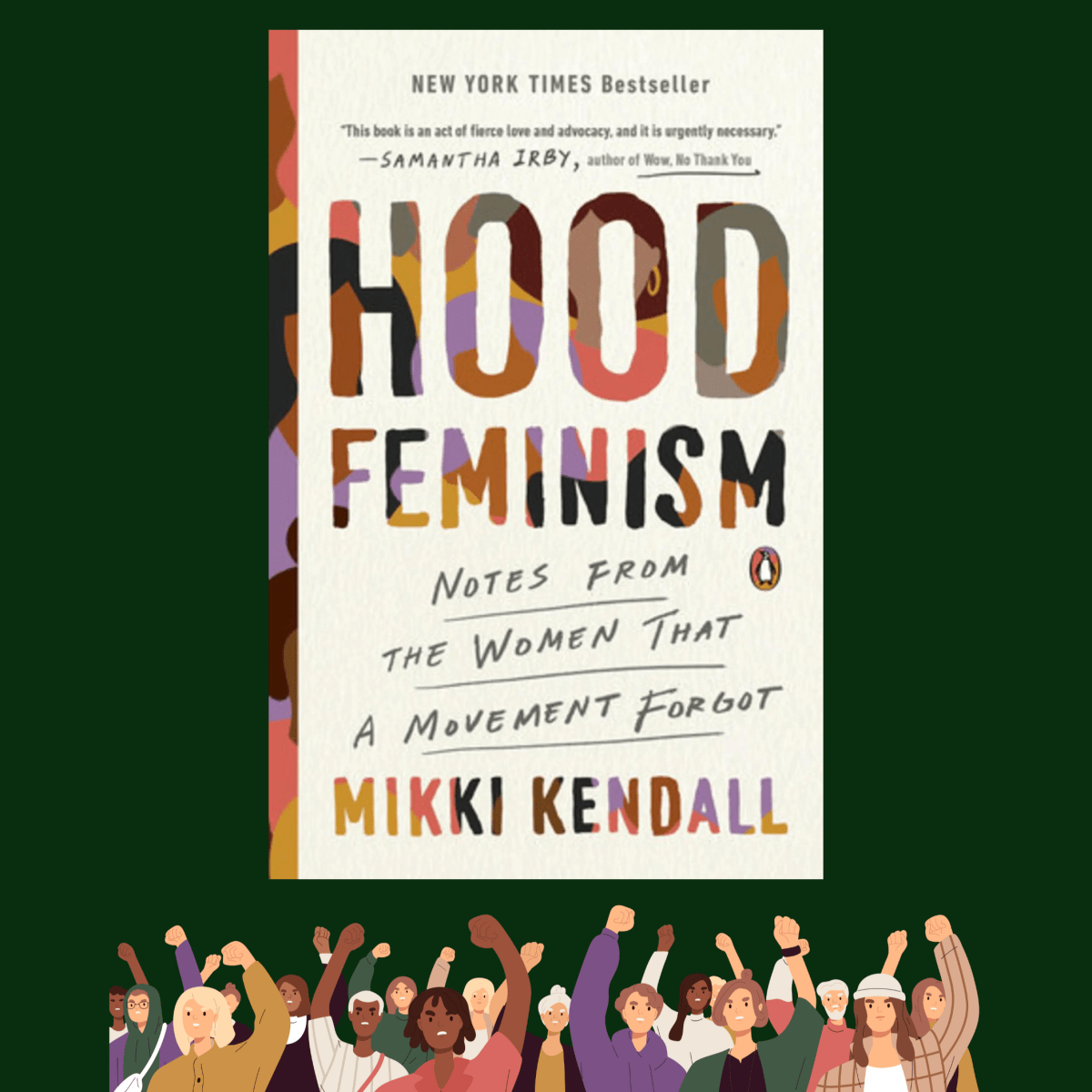
“Hood Feminism” encompasses the struggles and disparities faced by women of color. It emphasizes the need for intersectional feminism to address these multifaceted realities and promote genuine equality and support.
















 HEART, MIND & GUT
Leave a comment