
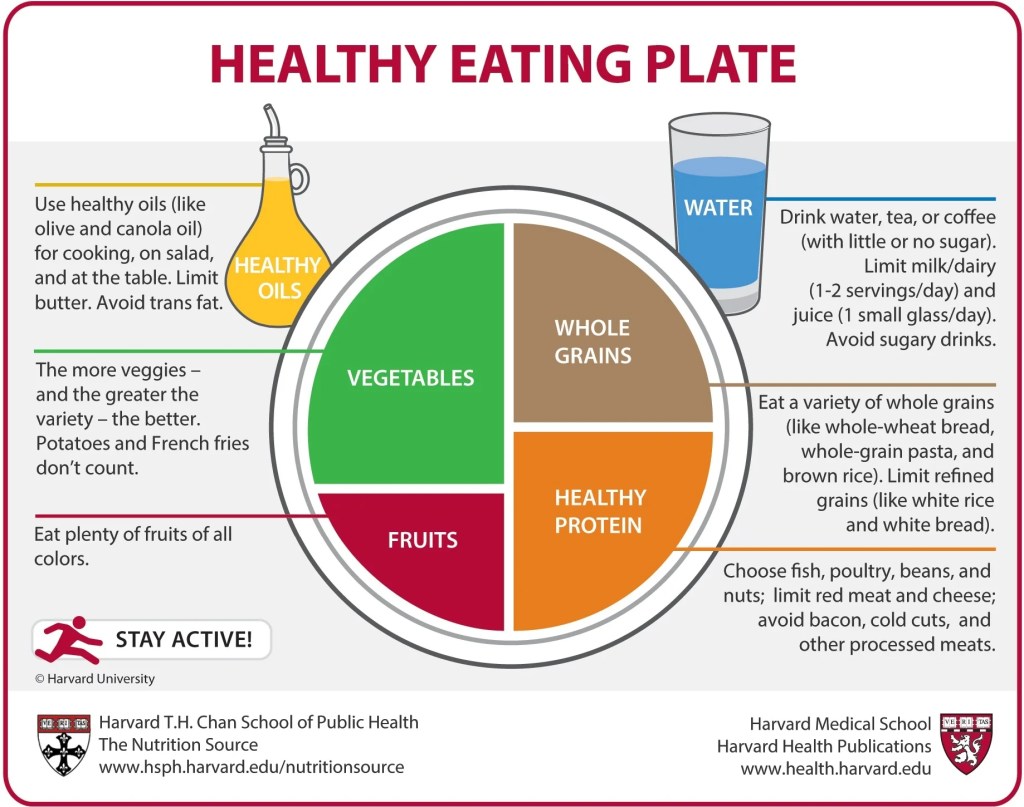
What is Harvard Healthy Eating Plate?
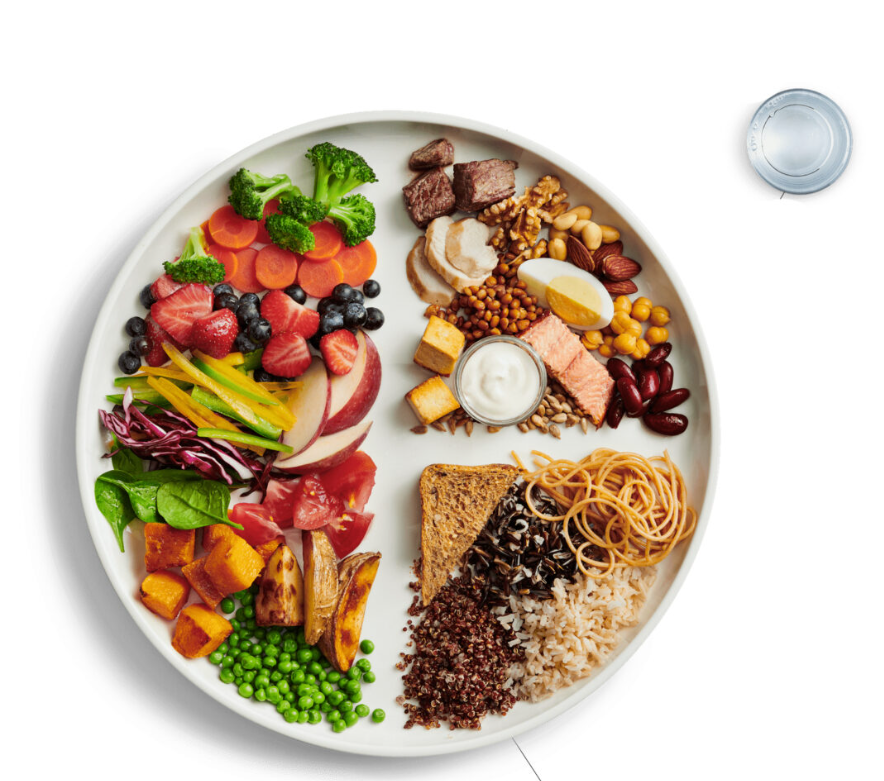
Harvard Medical School proposes using this visual of this plate to balance our diet instead of the food pyramids. Food pyramids have proven not reliable as they have carbohydrates as the base. It’s easy to follow the Harvard Healthy Eating Plate guidelines. You just have to represent the graphic on your own plate. More details about each part can be found below.
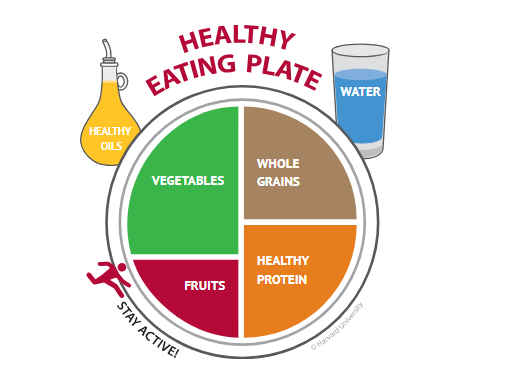
What can we find inside each portion?
Vegetables

- Combined with fruits, they should represent half the plate.
- The more veggies, the better, both in quantity and variety. This means our servings should be full of colour. Most pigments (source of colour) are linked to various vitamins. Eating a colourful dish gives us more vitamins.
- In-season vegetables. Consuming in-season vegetables it’s good for us and the environment. In-season vegetables (and fruits) are tastier, have more flavour. In-season vegetables don’t consume as many resources as out-of-season produce. They don’t need as much water, heating or transportation.
- Potato and its derivates are not vegetables. They are a carbohydrate source.
Fruits
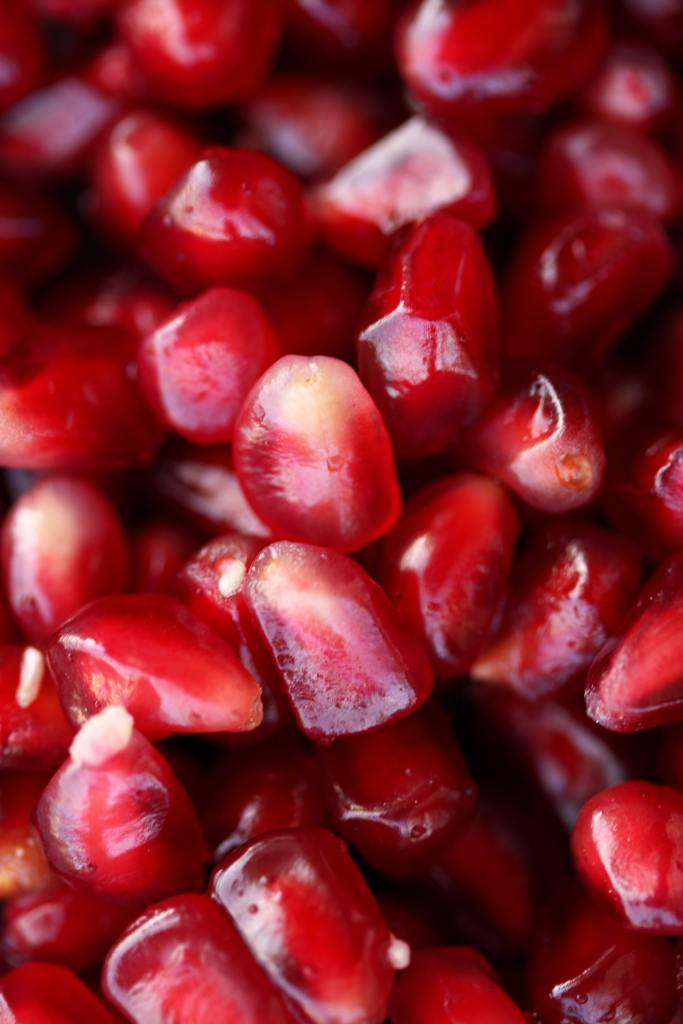
Just like the vegetables, we should consume in-season fruit and prepared in colourful ways.
Fruit fractions are smaller than vegetables because their nutrition portion is smaller than the vegetables.
Whole Grains

Carbohydrates should make up only a quarter of our daily intake. Amongst carbohydrates, we have grains such as wheat, barley, oat, buckwheat, millet, corn, rice, and potatoes, including sweet potatoes and chestnuts (let’s not forget about them!).
We should consume as much of them in their whole form as they have much more fiber that way. Fiber plays a crucial role in stabilizing blood sugar levels, promoting healthy digestion, nourishing our microbiota, and keeping us feeling full for longer. Check out this post about how to achieve a healthy gut.
Now, you might wonder why potatoes are included in this list. Well, potatoes are primarily composed of carbohydrates. While most vegetables contain around 4g of carbs per 100-150 grams (net weight), potatoes have 14g per 100 grams (net weight). That’s a whopping 350% more carbohydrates!
However, it’s important to note that we don’t have a whole option for potatoes, sweet potatoes, and chestnuts. Therefore, it’s advisable to consume them in moderation. Fortunately, we have plenty of whole grain options to choose from.
Healthy protein
Proteins should make up another 25% of our daily intake.
The best sources of protein are legumes such as beans, chickpeas, and lentils, as well as poultry and fish. If you prefer a vegetarian diet, you can still meet your protein needs by adjusting your intake accordingly.
It is advisable to avoid consuming red meats, cheese, cold cuts, and stuffed meats. These processed meats often contain added refined flour or sugar to reduce production costs.
To maintain a balanced diet, aim to include legume-based dishes 2-3 days a week, along with fish. On the remaining days, opt for low-fat meats and eggs if you are not a vegetarian. Keep in mind that most animal fats are saturated fats, so it is important to choose leaner options.

Healthy Fats
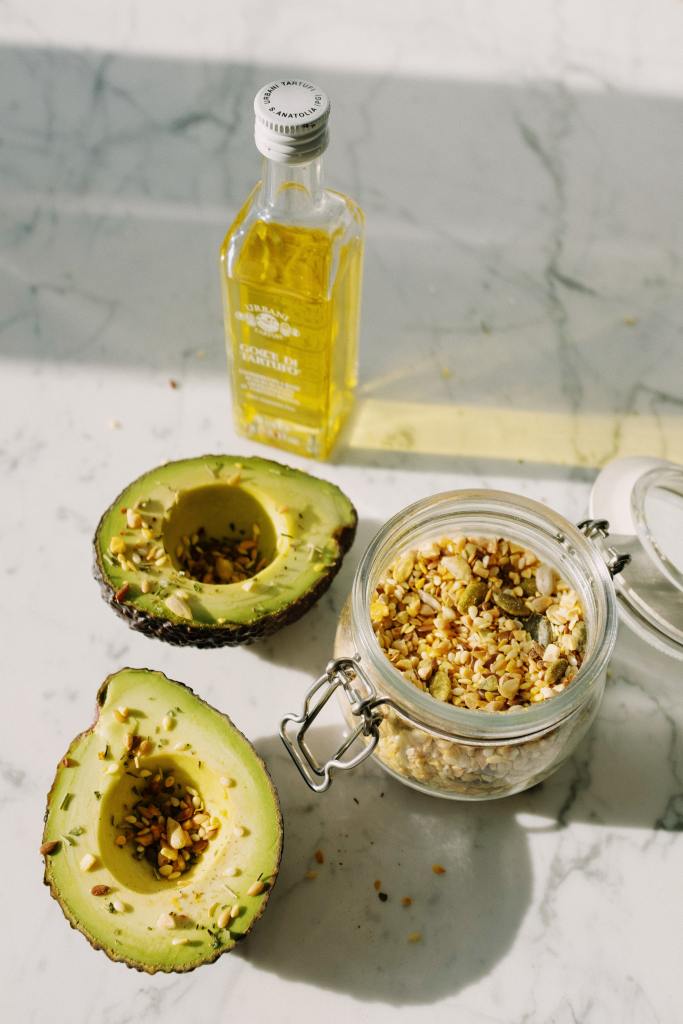
The Harvard Healthy Eating Plate, created with a United States mentality, places fats outside the plate. However, it is well-known that healthy fats are essential for protecting against cardiovascular diseases. The PREDIMED study highlights the benefits of extra virgin olive oil. (1)
Fats should make up around 30-35% of our overall diet, but it is important that these are healthy fats. This includes olive oil, sunflower oil, colza, sesame, and other nuts.
It is crucial to note that all fats should be unprocessed and not fried, salted, or sugary. The protective properties of fats lie in their ability to oxidize before consumption. When we fry or bake fats, they oxidize, rendering them ineffective or even harmful to our health.
Avoid butter.
Water
A simple way to determine how much to drink is to have a water glass (250ml) for every 10kg of body weight. For example, if someone weighs 80kg, they should aim to drink 8 glasses of water per day, which equals 2 litres.
It’s important to note that when we say water, we mean any liquid that doesn’t contain sugar or salt. This can include tea or broth. Juices, even those without added sugars, soups, and sugary drinks do not count as water, for me. Harvard includes juices as water if it’s small quantities, but I prefer to advise against them because they affect glycemic and are cariogenic.
According to Harvard, it is recommended to have 1-2 servings of unsweetened dairy daily. A serving of milk is equivalent to 200ml or 2 unsweetened natural yogurts (each with a volume of 125ml).
If you follow a vegan diet or simply don’t consume dairy, you can substitute it with plant-based drinks in the same portion sizes. Soy-based drinks are the most comparable to cow’s milk in terms of nutrients, but there are also options made from rice, buckwheat, oat, millet, and more. Just be mindful of the ingredients, as many plant-based drinks contain added sugars.

Physical Activity

Physical activity is crucial for a longer and healthier life, but you may wonder what you should do. According to Harvard, the top sports for achieving optimal health include swimming, Tai Chi, strength training, walking/trekking, and Kegel exercises.
To develop a consistent habit, the best approach is to join a group engaged in the activity. This helps us stay accountable, adds enjoyment, and, when there’s a teacher involved, ensures efficiency and safety. Having a teacher is important for activities like strength training and Tai Chi to prevent injuries.
How can a apply Harvard Healthy Eating Plate to my life?
We can apply Harvard Healthy Eating Plate in different ways: for each take, for each dish, daily or globally.
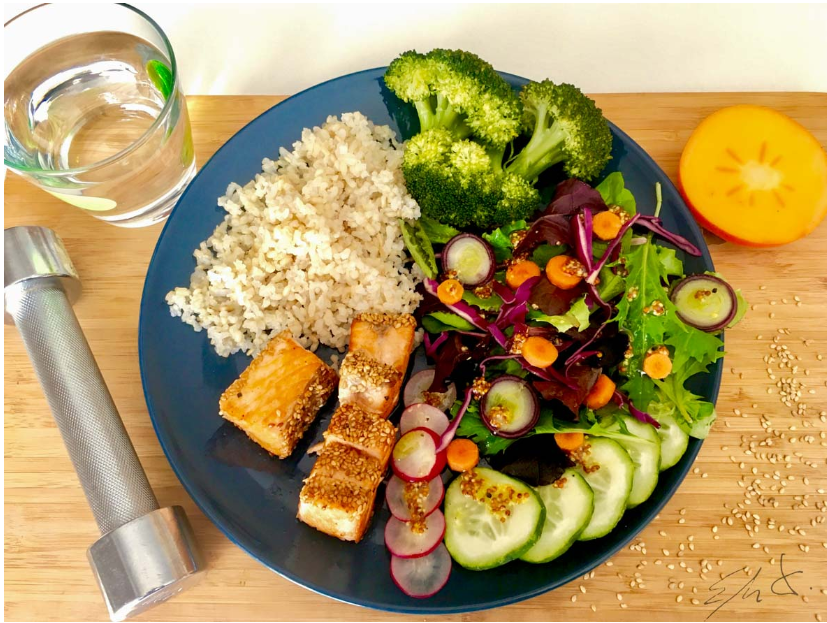
- For each course: This way we can see if each course represents approximately the Harvard Healthy Eating Plate. If you are from a country, like Spain, where it’s common to have multiples courses, you can try to achieve the proportions in the whole take. Example: For lunch you can have first a small salad, then some whole rice with legumes and some chicken. Last, you have a piece of fruit for dessert.
- Daily intake: If we can’t follow the proportions inside our normal dishes, we should make sure we keep the proportions along the day.
Example: I have lunch out with a friend and I eat a lot of rice. Next meal, I can skip or reduce the rice and increase the veggies. This is not an excuse to say wolf down something unhealthy because I will “make it up” with something healthy later. It doesn’t work like that. I’m sure you get the dynamics. - Lifestyle: If we keep the proportions in our meals, in theory, it should balance in our entire lifestyle, but not all the days are the same. We can skip something eventually. This is not a prison or torture.
We have to find the balance between happiness from eating and physical health. Tryout some healthy recipes and you will find out that it’s possible to eat tasty and healthy.
Some examples of a single course of Healthy Eating Plate
REFERENCIAS
- Ros, Emilio. “The PREDIMED Study.” Endocrinologia, Diabetes Y Nutricion, vol. 64, no. 2, 1 Feb. 2017, pp. 63–66, http://www.ncbi.nlm.nih.gov/pubmed/28440779?fbclid=IwAR2ZYErM23omCqyGnYNMbi4GTjRzh53K5_g5zFgIAAUc3TmxuWXy02yCF9U, https://doi.org/10.1016/j.endinu.2016.11.003.
- 5 of the best exercises you can ever do – Harvard Health [Internet]. Harvard Health. 2022 [cited 22 July 2022]. Available from: https://www.health.harvard.edu/staying-healthy/5-of-the-best-exercises-you-can-ever-do
- El Plato para Comer Saludable (Spanish) [Internet]. The Nutrition Source. 2022 [cited 22 July 2022]. Available from: https://www.hsph.harvard.edu/nutritionsource/healthy-eating-plate/translations/spanish/

 HEART, MIND & GUT
Leave a reply to nutrition 101 – HEART, MIND & GUT Cancel reply